
Approaches to Stakeholder Approval Context
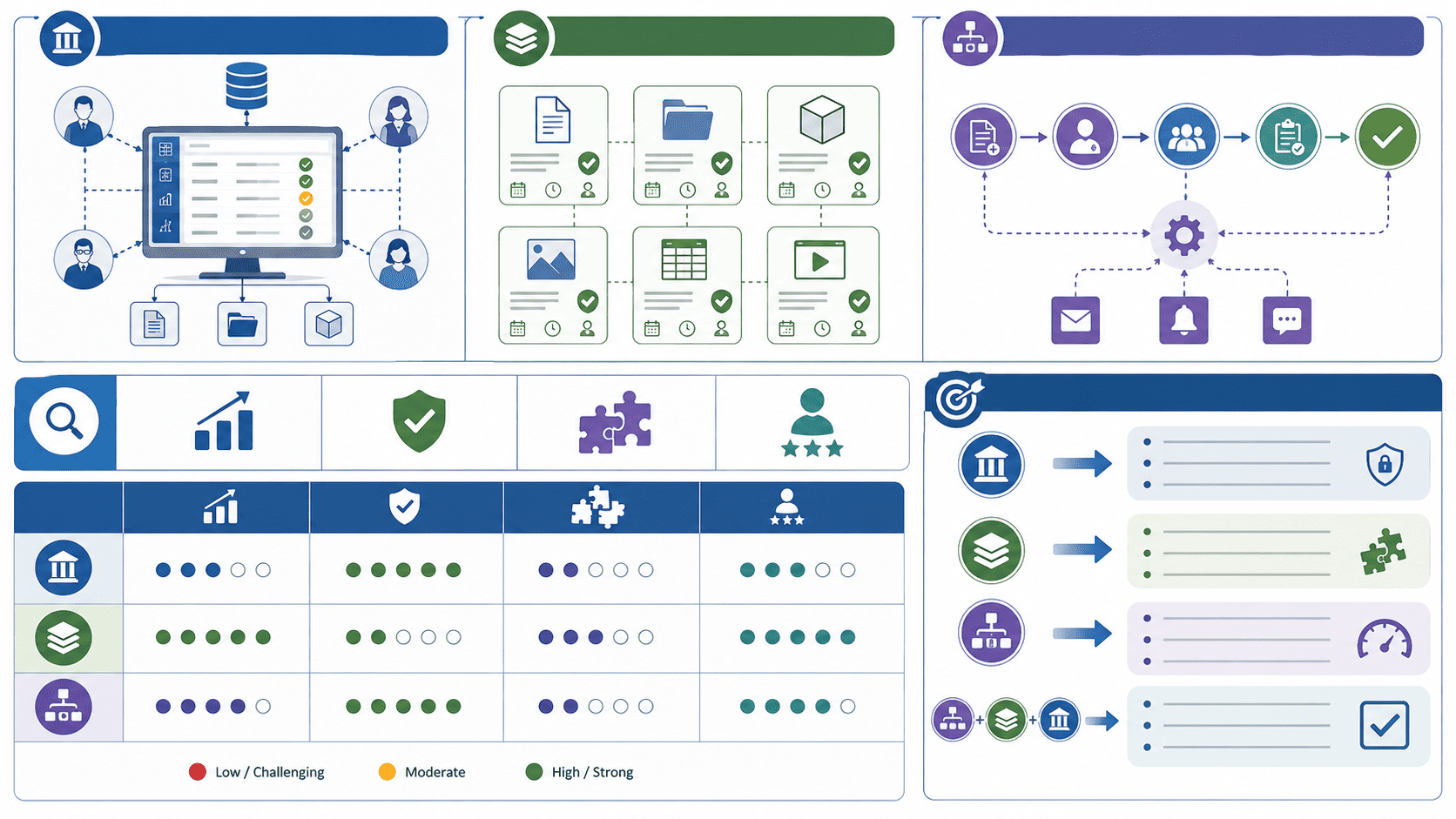
- Centralized Approval Registry: Establishes a single, authoritative system for all stakeholder approvals. This method offers a clear overview of statuses across shared project library components, enhancing auditability and control.
- Distributed Approval Metadata: Integrates approval context directly into the metadata of individual shared library items. This approach ensures information is inherently linked to assets, simplifying access and maintaining relevance.
- Workflow-Driven Approval Pipelines: Utilizes automated sequences to manage the entire approval lifecycle, from request initiation to final sign-off. This method streamlines processes and enforces consistent protocols.
Evaluation Criteria for Approval Management
- Scalability: Assesses the system's capacity to efficiently manage an expanding volume of shared library assets and a growing number of diverse stakeholders.
- Auditability: Focuses on the ease with which historical approval records can be accessed, verified, and used for compliance reporting and accountability.
- Integration Complexity: Evaluates the effort, resources, and technical expertise needed to successfully implement the approach within existing IT infrastructure.
- User Experience: Considers the intuitiveness and efficiency of the approval process for all involved stakeholders, minimizing friction and maximizing adoption.
Comparison of Approval Management Approaches
A centralized registry provides robust auditability, offering a single source of truth for all approval records. This simplifies compliance checks and historical tracking. However, its scalability can be challenged with extremely large, diverse libraries, potentially becoming a bottleneck if not optimized for high throughput and extensive permissions management.
Implementing a centralized system often entails significant integration complexity, requiring dedicated development or robust API connections with existing project management tools. While offering a consistent user interface, initial setup can be resource-intensive. User experience depends heavily on the registry's design and its ability to present clear, actionable approval requests efficiently.
Distributed approval metadata excels in scalability, as approval information scales directly with the number of shared library items. Each item carries its own context, avoiding central bottlenecks. Auditability, however, can be more fragmented. Gathering a comprehensive overview might require aggregating data from numerous sources, potentially complicating compliance reporting and comprehensive oversight.
Integration complexity for distributed metadata is generally lower for individual items but requires consistent implementation across all shared library types. This approach can offer a highly intuitive user experience, as approval status is visible directly where the asset resides, minimizing context switching for stakeholders. The challenge lies in ensuring metadata consistency across diverse platforms.
Workflow-driven pipelines offer excellent auditability due to their inherent logging capabilities, tracking every step of the approval process. This ensures transparency and accountability. Scalability is strong, as workflows can be designed to handle varying levels of complexity and volume, automating repetitive tasks. However, managing numerous distinct workflows for different asset types can introduce overhead.
The integration complexity for workflow pipelines can be substantial, often requiring specialized tools or platforms to define and execute the processes. However, once established, they provide a highly streamlined and predictable user experience for stakeholders, guiding them through required actions. The initial setup investment is often offset by long-term operational efficiencies and reduced manual intervention.
Recommendations for Method Selection
For organizations prioritizing centralized control and stringent audit trails, especially in highly regulated industries, a centralized approval registry is often the optimal choice. It provides a holistic view of all approvals, simplifying governance and compliance reporting. This method is suitable when the volume of shared libraries is manageable and a single source of truth is paramount for oversight.
When project libraries are highly diverse, rapidly evolving, and require approvals to be intrinsically linked to individual assets, distributed approval metadata offers significant advantages. It promotes autonomy and reduces central bottlenecks, ideal for agile environments where teams manage their own asset lifecycles. This approach suits scenarios where local context is critical for effective decision-making.
For scenarios demanding efficiency, consistency, and reduced manual effort in the approval process, workflow-driven pipelines are highly effective. They automate complex sequences, ensuring that all necessary steps are followed. This approach is particularly beneficial for DocPanda Records when dealing with high volumes of routine approvals or complex multi-stage sign-offs across different departments.
Often, a hybrid approach combining elements from these methods can yield the best results. For instance, using workflow pipelines for initial approvals, with final status recorded in distributed metadata, and an overarching centralized dashboard for auditability. Tailoring the solution to specific organizational needs is crucial for maximizing efficiency and stakeholder satisfaction.
Comments (4)


Cecilia Snyder
Thank you for your feedback! We aim to provide practical insights for effective project governance at DocPanda Records.

Mila Grant
I found the comparison section particularly helpful in understanding the trade-offs between centralized and distributed methods. It highlights key considerations for implementation.

Douglas Moreno
We're glad to hear that. Understanding these nuances is crucial for selecting the right approach for your specific operational context.
Trevor Wilson
This article provides a very clear and concise overview of complex approval management strategies. The breakdown of each approach is highly valuable for strategic planning.