
Approaches to Bridging Knowledge Gaps
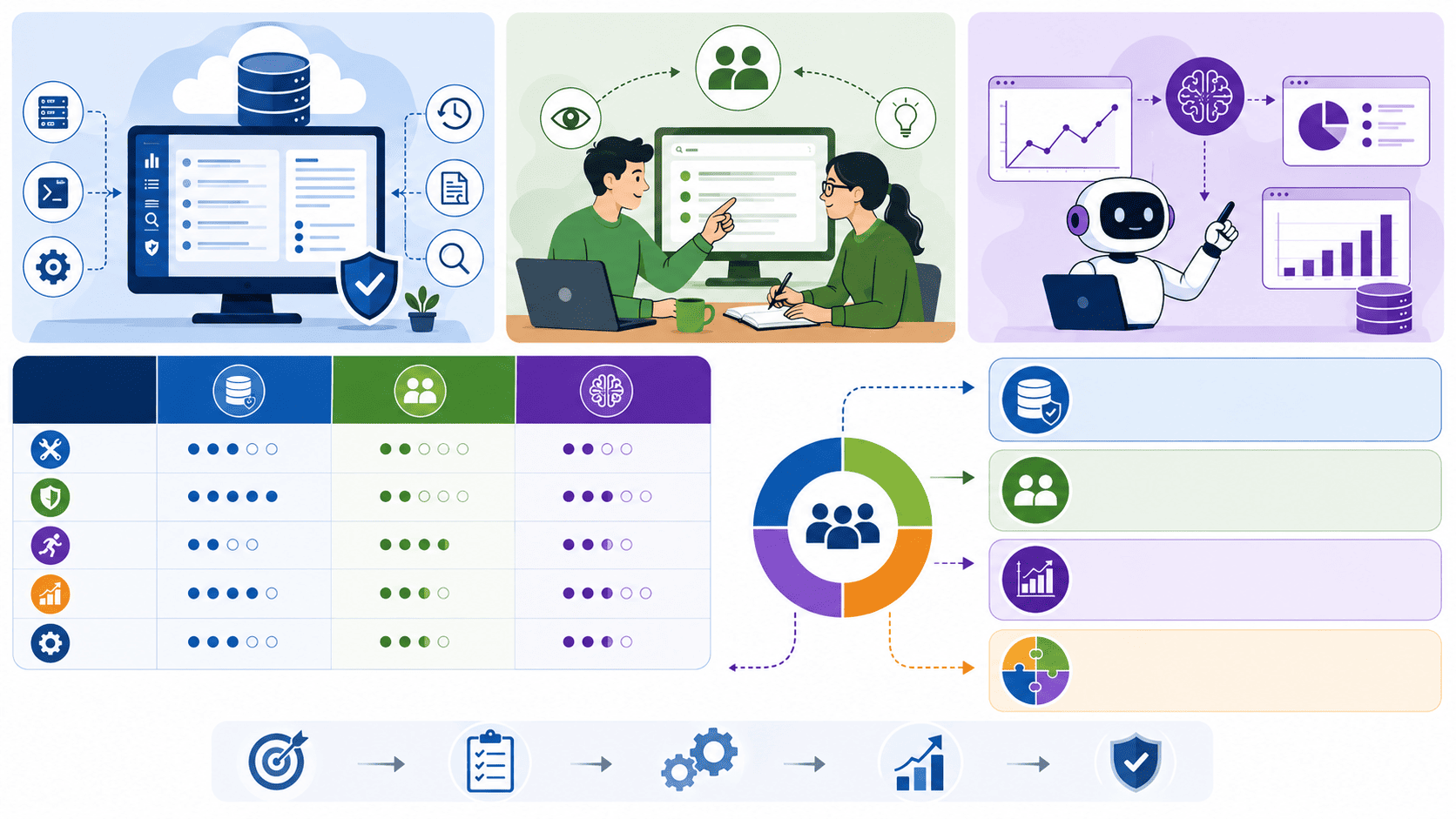
- Centralized Log Repository: Integrates operational logs into a shared knowledge base. Provides immediate access to historical context and procedural steps, reducing reliance on individual memory during transitions.
- Structured Peer Mentorship: New team members shadow experienced colleagues, actively reviewing logs. Combines observation with theoretical understanding, fostering direct knowledge transfer and clarifying entries efficiently.
- Automated Log Insights: Software analyzes standardized logs, generating reports on common issues and resolutions. This proactive approach highlights critical information, streamlining onboarding and knowledge acquisition.
Key Evaluation Criteria
- Implementation Effort: Assess required resources, time, and technical expertise. Consider integration needs with existing systems and initial setup.
- Knowledge Longevity: How effectively does the method ensure long-term retention of critical operational knowledge across team changes?
- Onboarding Efficiency: Measures impact on accelerating new team member integration. Focus on reducing time to full productivity.
- Adaptability: How easily can the approach scale with team growth or operational scope changes? Evaluate ongoing maintenance.
Comparative Analysis of Approaches
Implementing a Centralized Log Repository demands notable initial effort, requiring robust infrastructure and clear log standardization. However, it excels in knowledge longevity, storing information systematically and making it highly accessible. This significantly reduces knowledge loss during team transitions, providing a stable, reliable source of truth.
For onboarding, new team members can independently review historical data, accelerating their understanding of past issues and solutions, though direct interaction is limited. Its adaptability is high once established, as it scales well with data volume. Ongoing maintenance involves ensuring log quality and system updates, a manageable effort for DocPanda Records.
Structured Peer Mentorship has a lower initial implementation barrier, primarily requiring time for mentor-mentee pairing and defining review guidelines. Its strength lies in onboarding efficiency; new hires gain practical context and immediate clarification from experienced colleagues. This direct interaction significantly speeds up their ramp-up time and integration.
Knowledge longevity with mentorship can be inconsistent, as it relies on individual mentors. Institutional memory might suffer if key mentors leave. Adaptability is moderate; scaling requires a sufficient pool of experienced mentors and structured programs to manage growing teams effectively, which can be a limiting factor in rapid expansion.
Automated Log Insights requires significant upfront investment in specialized software and configuration. Yet, it offers high adaptability and enhances knowledge longevity by systematically extracting and summarizing patterns. For onboarding, new team members receive condensed, relevant information, accelerating understanding of recurring challenges without direct human context, scaling efficiently with data.
Strategic Recommendations for Implementation
For organizations prioritizing robust, long-term knowledge retention and systematic data access, the Centralized Log Repository is ideal. It establishes a single source of truth, minimizing tribal knowledge dependencies. This approach suits large, stable teams where comprehensive historical data review is paramount.
When rapid onboarding and direct, practical knowledge transfer are critical, Structured Peer Mentorship offers immediate benefits. It fosters strong team cohesion and provides invaluable context. This method is highly effective for smaller, agile teams or for integrating new hires into complex, hands-on roles at DocPanda Records.
Organizations dealing with high volumes of operational data and seeking efficient trend identification should consider Automated Log Insights. This method excels at proactive problem identification and provides summarized overviews, invaluable for strategic decision-making and continuous process improvement across various departments.
Ultimately, a hybrid approach often yields the best results. Combining a centralized repository for foundational knowledge with peer mentorship for practical application, supplemented by automated insights for trend analysis, offers the most comprehensive solution. DocPanda Records can tailor this based on specific operational needs and team dynamics.
Comments (4)


Naomi Guerrero
Thank you for your feedback! We believe that long-term knowledge retention is crucial for sustained operational excellence and smooth team integration.

Christine Butler
I found the section on Automated Log Insights very interesting. How quickly can such a system typically be deployed in a medium-sized enterprise?

Drake Perez
Deployment speed for Automated Log Insights varies significantly based on existing infrastructure and data volume. Initial setup and configuration can range from a few weeks to several months for a medium-sized enterprise, depending on complexity.
Anthony Stone
This article provides a clear overview of different strategies. I particularly appreciate the focus on knowledge longevity, which is often overlooked during transitions.