
Approaches to Audit-Ready Version Notes
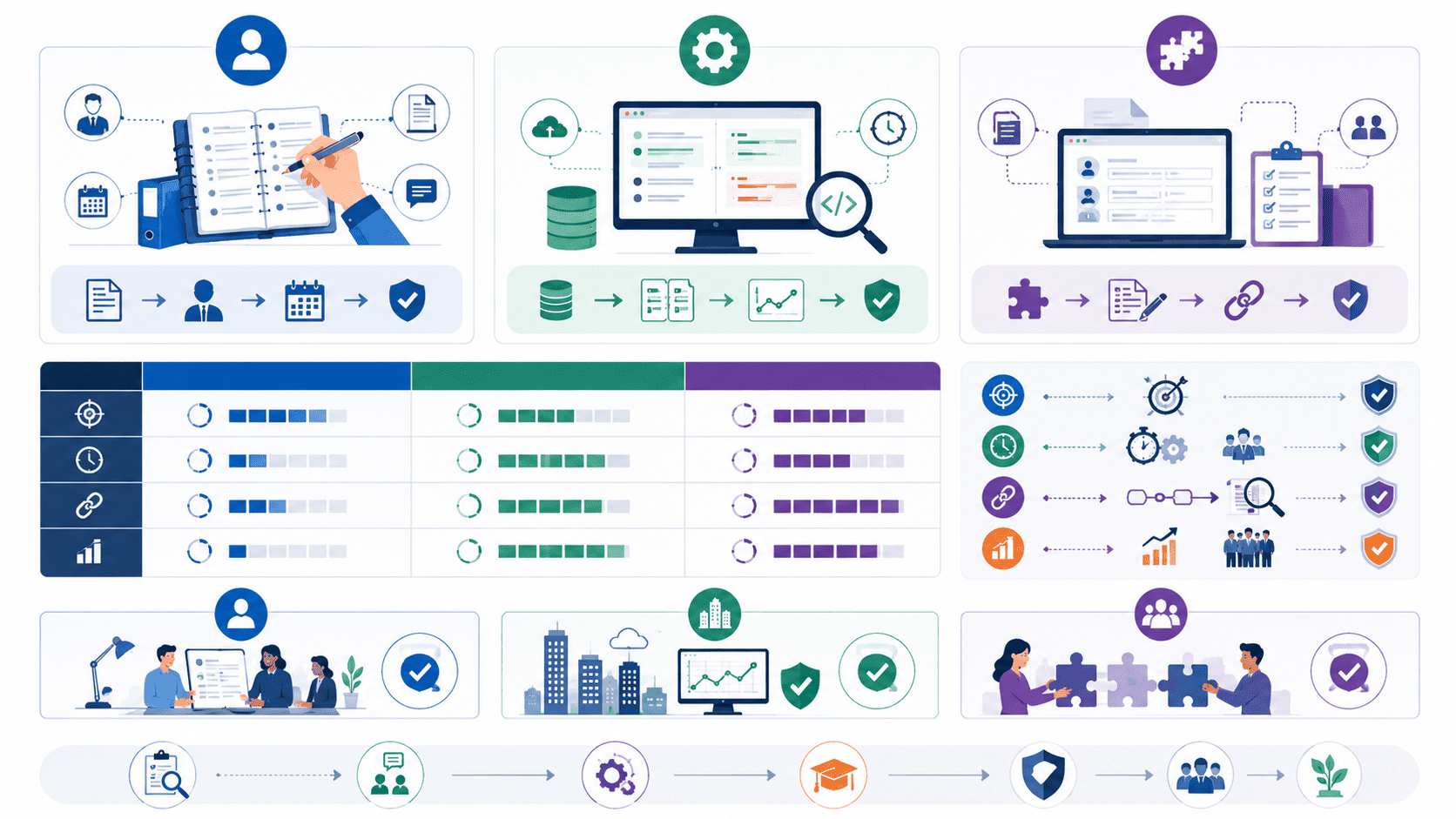
- Manual Version Logging: Manual version logging entails a meticulous, human-driven recording of every modification, detailing author, date, and justification. It demands strict adherence to internal guidelines and consistent review for audit readiness.
- Automated Change Tracking: Automated change tracking leverages specialized software or version control systems to log modifications, diffs, and metadata automatically. This significantly reduces human error, offering an objective, verifiable record of revisions.
- Hybrid Structured Templates: The hybrid approach merges automated tracking with structured manual input using predefined templates. This captures critical contextual information consistently while leveraging system efficiency for comprehensive version notes.
Key Evaluation Criteria for Documentation Handoffs
- Accuracy and Verifiability: Assess the reliability of recorded information and the ease of cross-referencing details during an audit. Errors compromise compliance and trust.
- Operational Efficiency: Evaluate the time and resources needed for implementation and maintenance. Consider the impact on documentation workflows and resource allocation.
- Traceability and Context: Examine how effectively changes link to specific requirements, decisions, or issues. A clear narrative is essential for auditor comprehension.
- Scalability and Adaptability: Determine if the method scales with increasing documentation volumes and adapts to evolving project complexities or team sizes efficiently.
Comparative Analysis of Version Note Methodologies
Manual version logging offers high accuracy, provided human diligence is unwavering. Every detail is meticulously recorded, offering rich context. Yet, it's prone to human error or omissions if not strictly managed. Operational efficiency is low, demanding significant time from writers and reviewers, impacting resource utilization.
Traceability in manual logging relies on initial entry quality and consistent linking. Without robust cross-referencing, connecting changes to project drivers is challenging. Scalability is a concern; as documentation volumes or teams expand, the overhead for meticulous records increases exponentially, often becoming unsustainable for large projects at DocPanda Records.
Automated change tracking excels in accuracy and verifiability, removing human transcription errors. Systems log every modification objectively, providing an immutable record. Operational efficiency is a primary advantage; once configured, systems continuously track changes with minimal intervention, freeing writers for content creation, optimizing resource allocation.
Traceability with automated systems is strong for what changed and when. However, capturing the why—the contextual narrative linking changes to requirements or decisions—can be less intuitive. Scalability is a key strength; automated systems manage vast data and users without proportional overhead, ideal for growing organizations and complex documentation landscapes.
The hybrid approach combines strengths. It enhances accuracy by leveraging automated tracking for objective data, while structured templates ensure consistent manual input of critical context, mitigating human error risks. Operational efficiency improves over manual methods, as routine tracking is automated. Yet, disciplined manual entry still introduces some overhead.
Traceability is a significant strength of the hybrid model. Integrating structured manual fields for linking changes to specific requirements or decisions provides a comprehensive narrative auditors value, creating a robust audit trail. Scalability is generally good; while manual input requires effort, the structured nature and automated backbone adapt to increasing complexity better than purely manual systems, supporting DocPanda Records' growth.
Recommendations for Selecting Your Version Note Strategy
For small-scale projects with minimal changes and stable teams, manual version logging can be viable. Low initial setup and direct human oversight are advantageous where budgetary constraints limit tool acquisition. Rigorous review processes and strong internal discipline are crucial for audit readiness and preventing inconsistencies.
In large, dynamic environments with frequent updates and stringent compliance, automated change tracking is often superior. It offers unparalleled accuracy, efficiency, and scalability, reducing administrative burden. While initial setup requires tool investment, long-term operational benefits and reduced non-compliance risk are substantial, a sound strategic decision.
For organizations seeking a balance between automated efficiency and rich contextual detail, the hybrid structured templates approach is highly recommended. It allows automated capture of technical changes while providing dedicated fields for human insights into the 'why' behind modifications. This is effective where both granular technical detail and comprehensive narrative context are crucial for audit success.
Regardless of the chosen approach, continuous evaluation and refinement are essential. Regularly review version note processes, solicit feedback from auditors and internal teams, and adapt methodology to evolving needs and regulatory landscapes. Investing in training for documentation specialists will maximize effectiveness and ensure consistent adherence to best practices.
Comments (0)
Leave a comment